2026 Best Fish Box Coolers for Global Buyers?

Choosing the right Fish Box Coolers in 2026 requires more than comparing capacity and advertised cooling hours. Global buyers face different transport routes, climates, handling systems, and seafood regulations. A box that performs well on a short coastal delivery may struggle during a long, warm transfer through several warehouses. Practical evaluation must consider insulation thickness, internal volume, lid sealing, drainage, stackability, and cleaning access.

This guide examines leading Fish Box Coolers from a buyer’s perspective. It focuses on real operating details, such as wet ice around fresh catch, forklift movement, pallet dimensions, and repeated washing. Materials should be durable and suitable for food-contact use, while suppliers should provide clear specifications and traceable quality information. Exporters also need to confirm packaging standards, documentation, and destination-market requirements before ordering.

No cooler wins every route. That matters. Some models protect temperature well but consume valuable storage space. Others are lightweight, yet their hinges or drain plugs may require closer inspection. These trade-offs are easy to miss in product photographs. The following comparison therefore balances expert specifications with practical experience, supplier reliability, and total operating cost. It also leaves room for uncertainty, because field performance can change with loading habits, ice quality, weather, and handling discipline. A careful buyer should test samples before committing to a large international shipment.
2026 Best Fish Box Coolers for Global Buyers?

What Is a Fish Box Cooler and How Does It Work?

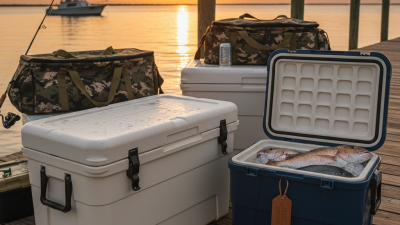
A fish box cooler is an insulated container designed to protect fresh catch during storage and transport. It combines a rigid shell, thermal insulation, a tight-fitting lid, and often a drain plug. The box slows heat gain; it does not create cold by itself. That distinction matters. Most models rely on pre-chilled ice or reusable frozen packs placed around the fish.

Cold air and direct contact draw heat from the catch, while insulation reduces outside warming. Meltwater collects below the load and can exit through the drain, keeping fish from soaking. However, drainage is not automatically better. If the drain stays open in a warm vehicle, cold air escapes and cooling weakens. A reliable loading method uses a clean base layer, evenly spaced fish, and ice above and between each layer. Leave little empty space, but do not crush delicate fillets.

For global buyers, useful specifications include internal volume, insulation thickness, wall strength, food-contact materials, handles, and drainage design. Check temperature performance under realistic loading, not only laboratory claims. A box may hold ice for two days in shade but far less under direct sun. I have seen buyers focus on capacity and overlook lid fit. That small error can raise internal temperature quickly. Before purchase, test cleaning access and lifting weight with a full load. A cooler that works on paper may be awkward at the dock.

Key Types, Materials, Sizes, and Insulation Options

2026 Best Fish Box Coolers for Global Buyers

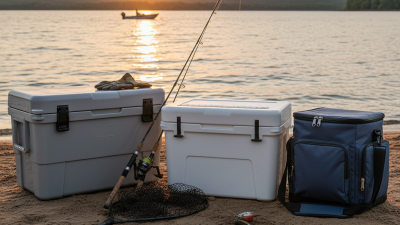
Selecting a fish box cooler starts with the handling environment, not appearance. Insulated hard boxes suit boats, markets, and long-distance transport. Soft-sided coolers work better for short trips and limited storage. Foldable models save warehouse space, but their hinges and seams need careful inspection. No cooler is perfect.

Material affects durability, hygiene, and weight. High-density polyethylene resists impacts, saltwater, and repeated washing. Polypropylene is lighter and often suitable for stackable containers. Stainless steel hardware can reduce corrosion around latches and handles.

Look for smooth, food-contact surfaces with few deep joints. A drain plug helps remove meltwater quickly, although weak fittings can leak after rough handling.

Size should match the fish load, ice ratio, and available transport space. A small box may suit daily catches, while larger containers need stronger handles and reinforced corners.

Polyurethane insulation usually offers dependable thermal retention for demanding routes. Expanded polystyrene is lightweight and economical, but it can crack and provide less structural strength. Expanded polypropylene balances resilience and insulation in reusable designs. Vacuum insulation can save space, yet it costs more and may suffer from punctures.

In hot climates, thicker walls and tight-fitting lids matter. In field checks, buyers should measure interior volume, test lid compression, and inspect drainage before ordering.

Published insulation claims can vary with ice quantity, opening frequency, and ambient temperature. That part is easy to underestimate.

How to Choose the Right Fish Box Cooler for Global Trade

For global fish trade, choosing a fish box cooler starts with the journey, not the catalog. The FAO State of World Fisheries and Aquaculture 2024 reported 185.4 million tonnes of aquatic animal production in 2022. Around 89% was used for human consumption. That scale makes temperature control a commercial necessity.

Check the full route first. A box crossing warm ports needs thick insulation, tight-fitting lids, and enough internal space for ice without crushing fillets. Measure usable volume, not the advertised capacity. A 40-liter box may hold far less after adding ice and liners. Rotomolded construction can resist rough handling, but excessive weight increases freight costs. Small details matter.

Ask for verified thermal test results. Testing should show the starting temperature, ambient conditions, ice load, and holding time. Without these details, “long-lasting” means very little. The UNEP Food Waste Index 2024 estimated 1.05 billion tonnes of food were wasted in 2022. Better packaging cannot solve every loss, but it can reduce avoidable temperature damage. For seafood, select food-contact materials, smooth interiors, drainable designs, and traceable production records. Check whether dimensions fit pallets and local trucks. I once overlooked lid clearance; the boxes fit the pallet, but not the warehouse rack. That mistake was expensive. Insulation performance also changes with weather, loading habits, and repeated washing. A cooler that works in a laboratory may disappoint beside a sunny container yard.

Performance, Durability, Food Safety, and Transport Standards

2026 Best Fish Box Coolers for Global Buyers

Performance starts with temperature control, not appearance. FAO’s The State of World Fisheries and Aquaculture 2024 reported 185.4 million tonnes of global fisheries and aquaculture production in 2022. That volume makes cold-chain reliability critical. For chilled fish, select boxes with thick, uniform insulation, tight lids, and stable internal surfaces. Codex CAC/RCP 52-2003 recommends keeping chilled fish as close to 0°C as practical. A built-in temperature logger adds useful evidence during long transfers.

Durability matters when boxes face wet decks, forklifts, stacking, and repeated washing. Look for impact-resistant construction, reinforced corners, secure hinges, and drainage that prevents standing water. The best design is not always the heaviest. Excess weight increases handling costs and may reduce usable payload. I have seen attractive containers fail around hinges first. That detail deserves more attention. Buyers should request drop-test results, cycle testing, and maximum stacking-load data before purchase.

Food safety depends on cleanability and transport discipline. Interior surfaces should be smooth, non-porous, and suitable for food contact. FDA Food Code 2022 uses 5°C as a cold-holding reference, while importing countries may apply different rules. Confirm the destination requirements. ATP transport principles also emphasize sanitary, temperature-controlled equipment for perishable foods. Washable seals, removable fittings, and traceable material declarations support reliable inspections. Some specifications remain unclear in real use. Trial loading with ice, fish, and a temperature probe is still essential.

2026 Best Fish Box Coolers for Global Buyers? — Performance, Durability, Food Safety, and Transport Standards
Cooler Profile Typical External Size
(L × W × H)
Approx. Capacity Empty Weight Insulation Construction Indicative Cold-Holding Performance Durability Features Food-Safety Requirements Transport and Compliance Considerations Best Use Overall Suitability
Compact Insulated Fish Box
Stackable reusable box
600 × 400 × 250 mm 35–45 L
Approximately 15–25 kg of packed fish, depending on ice ratio
2.0–3.5 kg Expanded polypropylene or molded food-contact polymer; approximately 25–35 mm insulation thickness Approximately 12–24 hours at 0–5°C when pre-chilled and packed with an appropriate ice-to-product ratio; actual results depend on ambient temperature, opening frequency, and loading method Lightweight construction, reinforced corners, smooth internal surfaces, molded stacking feet, and drainage plug or meltwater outlet Use food-contact compliant materials; common verification routes include EU Regulation (EC) No 1935/2004 and Commission Regulation (EU) No 10/2011, or applicable national food-contact rules Fits common 600 × 400 mm logistics footprints; verify pallet pattern, ventilation, gross weight, and load restraint requirements before shipment Retail delivery, short-distance seafood distribution, and last-mile handling ★★★★☆
Medium Commercial Fish Box
Reusable seafood distribution box
800 × 400 × 300 mm 70–85 L
Approximately 30–45 kg of packed fish, depending on product density and ice load
3.5–5.5 kg High-density polyethylene shell with molded polyurethane or expanded polymer insulation; approximately 30–45 mm insulation thickness Approximately 18–36 hours at 0–5°C under controlled test conditions with pre-cooled contents and sufficient ice or phase-change material Impact-resistant shell, reinforced handles, replaceable gasket where applicable, stack alignment ribs, and washable non-absorbent interior Interior should be non-toxic, non-absorbent, corrosion-resistant, and easy to clean. A documented cleaning and sanitation procedure is recommended for HACCP-based operations Suitable for road, air, and short sea transport when packed within carrier weight limits; use leak-resistant closures and secondary containment where required Wholesale fish markets, processors, foodservice distribution, and regional transport ★★★★★
Heavy-Duty Large Fish Box
High-load reusable transport container
1000 × 600 × 400 mm 180–220 L
Approximately 80–120 kg of packed fish and cooling media, subject to safe working load
8–14 kg Rotomolded polyethylene outer shell with polyurethane insulation; approximately 40–60 mm insulation thickness Approximately 24–48 hours at 0–5°C in a closed-container benchmark; longer holding times require validated packaging, sufficient refrigerant, and documented thermal testing Thick impact-resistant walls, heavy-duty hinges, stainless or polymer hardware, replaceable seals, forklift-compatible base options, and high abrasion resistance Select materials and lubricants suitable for incidental food contact. Avoid exposed wood, untreated metal, absorbent liners, and damaged surfaces that can harbor contamination Confirm gross mass, pallet overhang, lifting points, lashing strength, and dimensional limits for the selected truck, vessel, or aircraft Commercial harvest handling, processing plants, port operations, and export consolidation ★★★★★
Insulated Pallet Fish Container
Bulk export and cold-chain unit
1200 × 800 × 800–1000 mm 500–750 L
Approximately 250–450 kg product and cooling media, depending on internal configuration
25–45 kg Insulated pallet box using molded polyethylene, polyurethane, or composite panels; approximately 50–75 mm insulation thickness Approximately 36–72 hours at 0–5°C only when thermal performance is validated for the intended route, ambient profile, product load, and refrigerant quantity Reinforced pallet base, four-way forklift entry where specified, replaceable lid, corner protection, drain system, and high stack-load capability Internal surfaces should be smooth, sealed, washable, and resistant to fish oils, saltwater, detergents, and repeated sanitation cycles. Obtain material declarations and migration test documentation where required For perishable food transport, review applicable ATP requirements for international road transport, carrier rules, pallet dimensions, gross mass, drainage, and load securing. Air shipments must also meet airline and IATA packaging requirements where applicable International sea freight, refrigerated trucking, export hubs, and high-volume processing ★★★★★
Portable Premium Fish Cooler
Small-batch temperature-controlled box
700 × 450 × 400 mm 90–110 L
Approximately 35–60 kg of product and cooling media
6–10 kg Thick polyurethane foam insulation inside a molded polymer shell; approximately 45–65 mm insulation thickness Approximately 24–48 hours at 0–5°C with pre-conditioning and validated ice-pack or phase-change-material placement Tight-fitting lid, compression latches, replaceable food-safe gasket, molded handles, corner guards, and low water absorption Confirm food-contact declarations for the liner, gasket, drain components, and refrigerant packs. Do not place loose refrigerant chemicals in direct contact with unpackaged seafood Convenient for courier, air, and mixed-mode transport; use an external temperature indicator or data logger for high-value or regulated shipments Premium seafood deliveries, catering, laboratory sampling, and time-sensitive parcels ★★★★☆
Collapsible Insulated Fish Box
Returnable logistics container
800 × 600 × 320 mm assembled;
approximately 800 × 600 × 120 mm folded
100–130 L
Approximately 45–70 kg packed load
7–12 kg Foldable polymer panels with removable insulation inserts or insulated liner; approximately 25–45 mm effective insulation thickness Approximately 12–30 hours at 0–5°C, depending heavily on liner design, closure quality, and the proportion of empty air space Reduced return volume, replaceable panels or liners, reinforced folding joints, washable surfaces, and locking geometry to prevent accidental collapse All internal liners and contact surfaces should be food-contact compliant, fully dryable, and free from cracks or crevices after repeated folding Efficient for return logistics and empty backhauls; confirm folded dimensions, stacking stability, and whether the carrier accepts the container as a reusable packaging system E-commerce seafood, returnable packaging pools, and multi-stop distribution ★★★★☆
Buyer verification notes: The capacity, weight, insulation thickness, and cold-holding figures above are representative specification ranges for common cooler configurations rather than data from a particular company or brand. Cold-holding time is not a universal rating and must be validated using the actual fish load, ice or phase-change material, packaging arrangement, ambient temperature, opening frequency, and transport duration. For international shipments, confirm the destination country's food-contact rules, applicable HACCP procedures, ATP requirements for refrigerated road transport, carrier dimensional limits, and temperature-recording requirements before purchase.

Comparing Suppliers, Costs, Customization, and International Shipping

Global buyers should compare landed performance, not catalog prices. FAO’s The State of World Fisheries and Aquaculture 2024 reports 185.4 million tonnes of aquatic animal production in 2022. That scale makes reliable fish box coolers essential for exporters, processors, and distributors. Supplier checks should cover insulation density, wall thickness, lid fit, drain design, and repeated-use strength. Ask for test records, food-contact declarations, and batch traceability. A lower factory quote may hide weak hinges or high replacement rates.

Customization affects both cost and handling. Buyers can specify internal dimensions, stacking ribs, drain plugs, printed markings, and temperature-monitoring spaces. However, every extra feature increases tooling, inspection, or packing charges. Request a sample before approving large production. It sounds obvious, but many purchasing teams skip it. I would compare at least three suppliers using the same specification sheet. The International Transport Forum’s transport outlooks repeatedly highlight capacity pressure and supply-chain disruption risks, so delivery promises need written assumptions. Calculate carton volume, pallet utilization, port charges, insurance, and import duties. The World Bank Logistics Performance Index 2023 evaluates customs, infrastructure, shipment arrangement, logistics quality, tracking, and timeliness; these factors matter when selecting an overseas supplier. Sea freight usually suits large orders, while urgent samples may require air transport. Yet empty cooler volume can make air shipping irrational. A spreadsheet can mislead. Use actual packed dimensions and recent freight quotations.