Choosing the 2026 Best Commercial Ice Box Cooler requires more than comparing volume, color, and price. Global buyers need dependable insulation, safe materials, practical drainage, and stable performance during transport. A cooler may look strong on a showroom floor. Real performance appears beside a crowded loading dock, under direct sunlight, or during a twelve-hour delivery.
The International Energy Agency’s The Future of Cooling reports that cooling demand could more than triple by 2050. This trend increases pressure on cold-chain operators to reduce energy use and prevent temperature loss. The Global Cold Chain Alliance also emphasizes stronger temperature visibility and resilient distribution systems. A Commercial Ice Box Cooler supports these goals when it holds ice efficiently and reduces unnecessary product exposure. However, no cooler wins every route. A thick wall can improve retention, yet it can reduce usable space and increase shipping weight. That trade-off deserves honest attention.
For 2026 procurement, buyers should examine tested insulation performance, gasket quality, hinge durability, food-contact documentation, and replacement-part access. Independent laboratory results are more useful than broad marketing claims. Buyers should also request field references from distributors, caterers, seafood suppliers, and pharmaceutical logistics teams where suitable. The World Health Organization’s temperature-management guidance reminds operators that packaging alone cannot replace monitoring and handling discipline. This point is easy to overlook. The best selection combines product evidence, supplier experience, and local service capability. Some specifications remain difficult to compare across regions, so careful verification is still necessary.
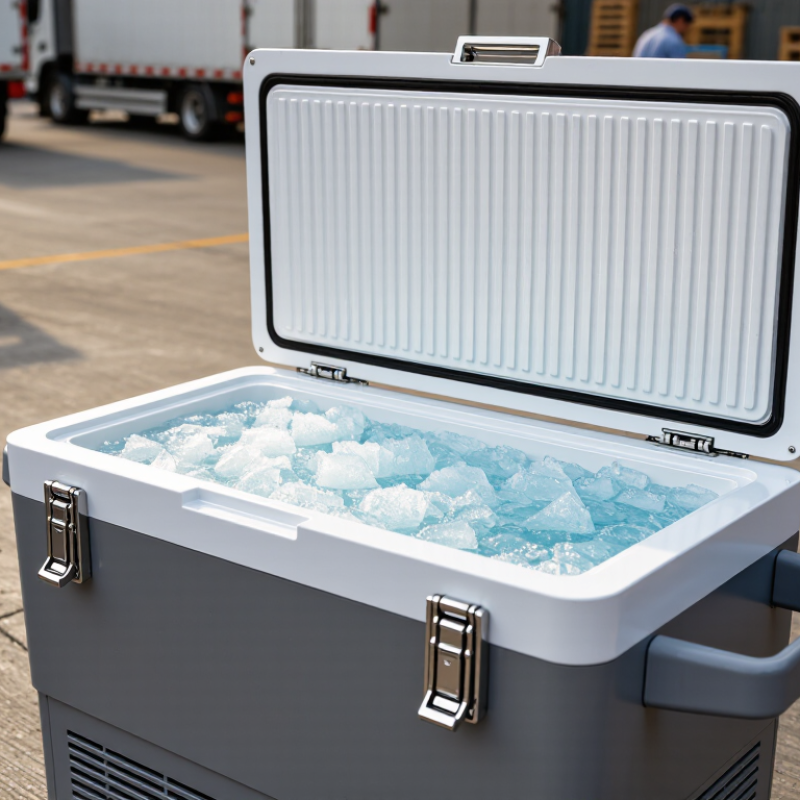
2026 Best Commercial Ice Box Cooler for Global Buyers
Commercial ice box coolers are insulated containers that preserve chilled products with ice or frozen packs. They work without continuous electricity, making them useful during delivery, outdoor service, and temporary storage. Their performance depends on insulation thickness, lid sealing, drainage, and how often the lid opens.
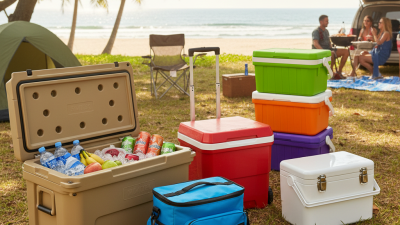
The main category is the hard-sided cooler, usually made from molded plastic with strong walls and a tight gasket. It suits seafood, dairy products, beverages, and catering supplies. Soft-sided coolers are lighter and easier to carry, but they usually hold less ice. Wheeled models help staff move heavy loads across warehouses, markets, and event areas. Some commercial units include internal dividers, drain plugs, or separate dry-storage sections.
Use matters more than appearance. A delivery team may need a narrow cooler that fits between vehicle shelves. A food stall may prefer a wide opening for fast product access. During product checks, I look for stable handles, smooth interior surfaces, replaceable seals, and clear capacity measurements. These details reduce cleaning problems and loading mistakes. Bigger is not always better. An oversized box can waste ice and slow handling. I once selected a large model for convenience, but its weight became a daily burden. Buyers should also test real loading patterns, because published capacity may not match usable space. Temperature records remain important when chilled goods require controlled storage.
Commercial ice box coolers are insulated containers designed to keep food, beverages, medical supplies, seafood, and other temperature-sensitive goods cold without continuous electrical power. The chart compares representative midpoint capacities for the main cooler categories commonly used by global buyers. Actual capacity, insulation performance, ice-retention time, and regulatory suitability vary by construction, climate, loading method, and application.
2026 Best Commercial Ice Box Cooler for Global Buyers
Professional cooling begins with predictable temperature control, not a large capacity figure. In field use, dense insulation reduces ice melt during long deliveries and outdoor service. A well-designed lid should close evenly and resist warm air leakage. Small gaps matter.
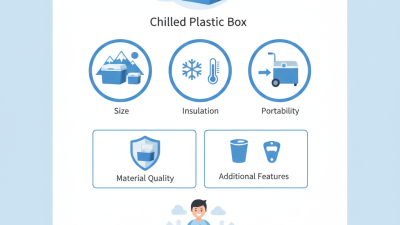
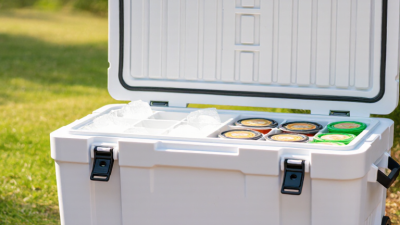
Look for thick, continuous insulation around the walls, base, and lid. The base deserves attention because hot pavement transfers heat quickly. Internal volume should match the daily load, leaving limited empty air space. Removable dividers help separate seafood, beverages, or packaged ingredients without crushing them. Drainage is practical. A wide drain port empties meltwater quickly and simplifies cleaning after each shift. Smooth, non-porous surfaces reduce residue near corners.
Commercial buyers also need dependable handling. Reinforced hinges, strong handles, and non-skid feet support repeated movement across loading docks. Caster wheels can help, but weak wheels become a liability on uneven floors. We learned this the hard way during a busy event. The cooler protected contents well, yet its overloaded lid became awkward to lift. That experience changed our evaluation criteria.
Ask suppliers for measured ice-retention results, empty and loaded weights, material specifications, and cleaning guidance. Test performance under your actual climate, transport time, and opening frequency. A cooler that performs well in a cool warehouse may struggle under tropical sun. Temperature logging provides stronger evidence than marketing claims.
| Performance Dimension | Recommended Commercial Specification | Professional Application Value | Evaluation Notes |
|---|---|---|---|
| Usable Capacity | 40–120 L internal volume | Suitable for catering, events, outdoor sales, medical transport, and food-service backup cooling | Select capacity according to product volume, ice ratio, and available transport space |
| Cooling Method | Passive ice-retention design; optional powered refrigeration models for continuous cooling | Passive units operate without mains electricity, while powered units support longer operating cycles | Confirm whether the application requires ice loading, battery power, or continuous electrical operation |
| Temperature Range | Typically 0–8 °C for chilled products when correctly pre-cooled and packed | Supports short-duration transport of beverages, fresh foods, and other temperature-sensitive goods | Actual temperature depends on ambient conditions, ice quantity, loading density, and opening frequency |
| Ice Retention | Approximately 3–7 days under controlled test conditions for heavy-duty insulated models | Reduces replenishment frequency during deliveries, exhibitions, and outdoor service operations | Require test results that state ambient temperature, ice load, internal load, and lid-opening schedule |
| Insulation | 50–75 mm closed-cell polyurethane or equivalent high-density foam insulation | Improves thermal stability and reduces meltwater formation compared with thin-wall containers | Wall thickness, lid seal, and insulation continuity are as important as the foam material itself |
| External Shell | UV-stabilized, impact-resistant molded plastic, commonly rotationally molded polyethylene | Resists outdoor exposure, repeated handling, and moderate impact during commercial use | Check resistance to UV exposure, cracking at low temperatures, and compatibility with cleaning chemicals |
| Food-Contact Interior | Smooth, non-porous, corrosion-resistant interior suitable for food-contact use | Simplifies washing and helps reduce liquid absorption, odor retention, and bacterial buildup | Request food-contact documentation applicable to the destination market |
| Lid and Gasket | Tight-fitting insulated lid with replaceable compression gasket | Limits warm-air exchange and helps maintain a stable internal temperature | Inspect hinge strength, gasket compression, latching security, and spare-part availability |
| Drainage | Large threaded drain plug with replaceable seal | Enables rapid removal of meltwater and faster cleaning between delivery cycles | A tethered plug and recessed drain design can reduce loss and damage during transport |
| Mobility | Integrated handles for smaller units; heavy-duty wheels and pull handle for larger units | Improves loading efficiency and reduces manual lifting in warehouses and event venues | Review wheel diameter, tread type, handle load rating, and compatibility with uneven surfaces |
| Load Rating | Typical static load rating: 80–250 kg, depending on construction and model size | Allows the top surface to support light equipment or temporary staging when rated for that use | Do not use the lid as a seat, step, or work platform unless the manufacturer provides a specific rating |
| Cleaning and Hygiene | Rounded internal corners, smooth surfaces, removable components, and drainable base | Supports routine sanitation in food-service and shared logistics operations | Use cleaning agents compatible with the shell, gasket, hinges, and drain materials |
| Monitoring | Optional digital thermometer or data logger with approximately ±0.5 °C accuracy | Provides temperature records for quality control and cold-chain verification | Verify calibration method, probe placement, battery life, and data-export capability |
| Powered Cooling Option | 12/24 V DC or 100–240 V AC models; typical setpoint range about −18 to +10 °C | Suitable for vehicle-based distribution, mobile catering, and applications requiring controlled cooling | Compare rated power input, startup current, refrigerant type, ventilation clearance, and low-voltage protection |
| Operating Environment | Common commercial target: 5–40 °C ambient for passive use; powered models may support wider ranges | Helps buyers match the cooler to indoor distribution, outdoor events, or vehicle service | Performance should be validated at the highest expected ambient temperature |
| Transport and Storage | Stackable or nestable design where possible; typical empty weight approximately 12–35 kg | Reduces warehouse footprint and improves handling efficiency for international logistics | Check external dimensions, pallet quantity, export packaging, and container-loading efficiency |
| Compliance Considerations | Food-contact, electrical safety, EMC, and refrigerant requirements according to destination market | Reduces customs, procurement, and operational risks for global buyers | Documentation requirements vary by country and by whether the unit is passive or electrically powered |
| Best-Fit Buying Profile | Heavy-duty insulation, reliable sealing, easy drainage, repairable hardware, and verified temperature performance | Balances cooling reliability, maintenance cost, service life, and total cost of ownership | Prioritize measured performance and after-sales parts support over appearance alone |
Note: Performance figures are representative commercial selection ranges. Actual results vary with model design, ambient temperature, ice or power input, product load, and operating practices.
The 2026 best commercial ice box cooler should match the work, not merely display the largest capacity. Measure daily demand, ice volume, food containers, and empty space together. A 100-liter box may suit catering teams, but it can waste vehicle space for smaller deliveries. I have seen buyers overestimate capacity and underestimate loading time. Internal dimensions matter more than advertised volume.
Insulation performance depends on wall thickness, lid sealing, and how often the cooler opens. During practical comparisons, a tight gasket and secure hinges often preserve cold temperatures better than impressive marketing claims. Choose thick, uniform insulation for long outdoor shifts. A drainage plug also helps staff clean melted ice quickly. Still, no cooler replaces proper temperature checks. Use a reliable thermometer, especially with perishable goods.
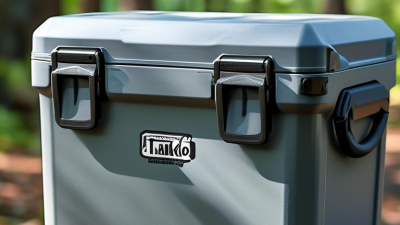
Durability should be judged at stress points. Check corner protection, hinge strength, handle attachment, and the base surface. Rotomolded construction can resist rough handling, but added weight may reduce mobility. Large wheels help on smooth floors and struggle on gravel. Telescoping handles are useful, yet they can become failure points under heavy loads. Test a fully loaded cooler before purchase. It should roll, lift, and fit through working spaces without awkward force. My own comparisons would improve by recording long-term repair needs, not only first-day performance.
Commercial ice box coolers for global buyers must protect food, not merely keep it cold. Choose smooth, non-porous inner walls that can withstand frequent washing. Rounded corners reduce trapped residue and make sanitation easier. Check the lid seal carefully. A weak gasket can admit warm air, dust, and insects.
Temperature control matters. The cooler should hold a stable range suitable for the intended food or medicine. Ask for test records under realistic loading conditions, not empty-box demonstrations. Materials should be food-contact compliant in the destination market. Request declarations, migration reports, cleaning instructions, and batch traceability documents. Requirements differ across countries, so confirm them with local importers or regulatory advisers. One checklist will not fit every market.
Tips: Inspect hinges, handles, drains, and latches for hidden dirt points. Use a calibrated thermometer during trial shipments. Record temperatures at opening, unloading, and storage. Avoid vague claims such as “fully hygienic” without evidence. A small detail matters: ice meltwater should drain away from stored products. Also review packaging labels, recycling marks, and language requirements before ordering. I would not rely on appearance alone; bright surfaces can still hide poor welds or weak insulation. Testing in your actual climate may reveal problems that factory photos never show.
A commercial ice box cooler should match climate, transport, and selling conditions. In tropical markets, thick insulation, UV-resistant shells, and tight gaskets matter most. The UNEP Global Cooling Watch 2023 reports that global cooling demand could more than triple by 2050. Heat protection is not optional.
For coastal regions, choose corrosion-resistant hinges and drain fittings. In humid warehouses, smooth interiors reduce cleaning problems. A 100–150 liter unit may suit small retailers, while mobile vendors often need lighter 40–80 liter models. The International Energy Agency reports that cooling already uses about 10% of global electricity demand. Passive cooling can reduce operating pressure, but ice availability remains a practical limitation.
Cold-climate buyers may prioritize capacity over extreme insulation. However, winter transport still creates temperature swings. Food businesses should verify local hygiene rules and maintain safe product temperatures with calibrated thermometers. Codex food hygiene guidance supports temperature control throughout storage and distribution. Numbers matter.
A common purchasing mistake is comparing only advertised ice-retention hours. Test results often use controlled conditions, not crowded markets or direct sunlight. Ask for independent test methods, usable internal volume, replacement-part access, and cleaning instructions. A perfect global model does not exist. The right cooler is market-specific, serviceable, and honestly tested.