How to Choose the Best 200l Ice Box for Your Needs?
When it comes to selecting the right 200l Ice Box, expert advice can be invaluable. John Reynolds, a renowned outdoor equipment specialist, emphasizes, "Understanding your specific needs is crucial when choosing an ice box." His insight reflects the importance of careful consideration.
A 200l Ice Box is more than just a cooler. It's an essential tool for camping, fishing, or even backyard gatherings. With various models available, making the right choice requires attention to detail. Think about how you plan to use it. Consider factors such as insulation quality, portability, and durability. These elements can greatly influence your experience.
Choosing an ice box isn’t always straightforward. Many people tend to overlook the importance of size and weight. For instance, a larger ice box may be cumbersome while traveling. On the other hand, a smaller one may not meet your storage needs. Reflecting on these aspects ensures you select a 200l Ice Box that serves you well in various situations.
Understanding Your Ice Box Requirements and Usage Scenarios
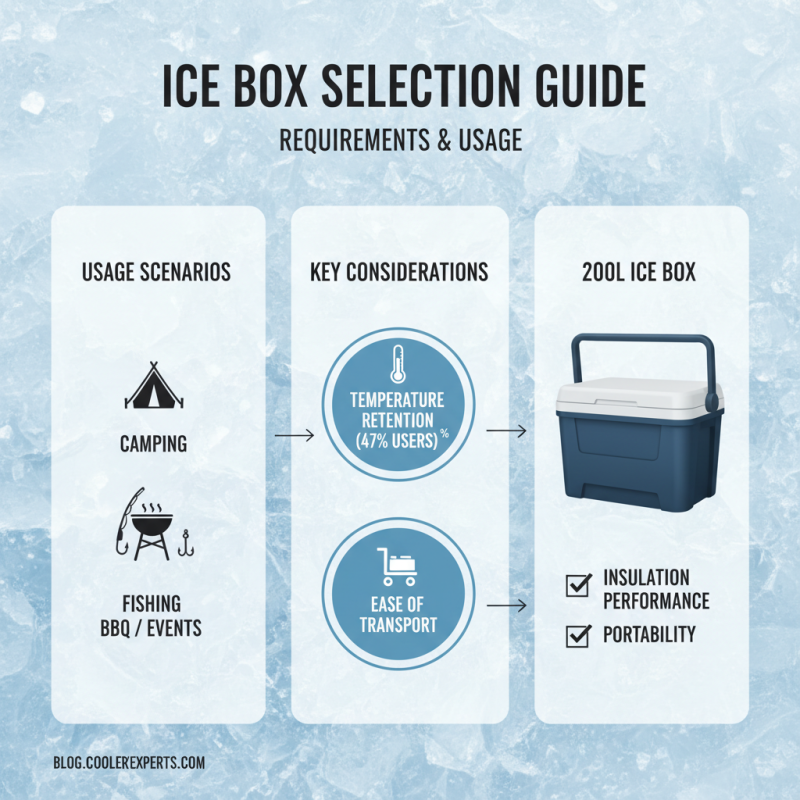
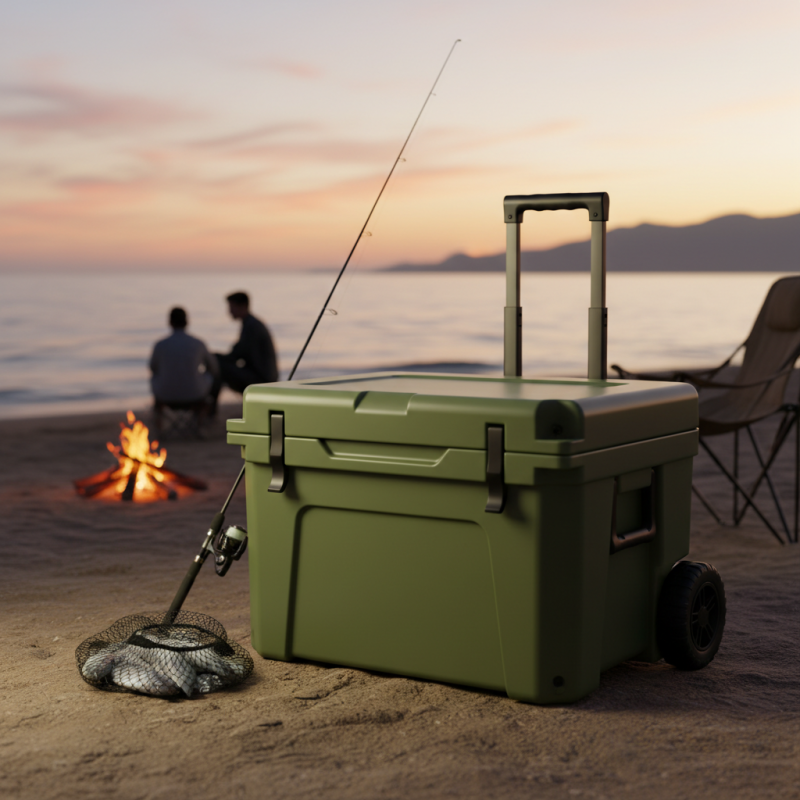
When selecting a 200L ice box, consider your specific usage scenarios. Will you be camping, fishing, or hosting a backyard barbecue? Each activity has unique demands. Reports indicate that up to 47% of users prioritize temperature retention as a key feature. It's crucial to balance insulation performance with ease of transport, especially for outdoor events.
Think about your storage needs as well. A 200L capacity can hold a significant amount of ice and food. Yet, stuffing it too full can hinder airflow, impacting cooling efficiency. Research suggests that maintaining at least 20% air space allows for better ice longevity. A well-organized ice box can enhance your overall experience, making retrieval easy and quick.
Tips: Always pre-chill your ice box before loading it up for an event. This simple step can increase ice retention by 30%. Also, consider using block ice rather than cubes; it melts slower and minimizes water accumulation. Reflect on how often you will use the box and under what conditions. Understanding these needs will ensure you make a more informed choice.
Evaluating Insulation Performance and Temperature Retention
When searching for a 200-liter ice box, insulation performance is a key factor. High-quality insulation materials can significantly enhance temperature retention. Look for models with thick foam in the walls and lid. This foam traps cold air inside, keeping contents chilled longer. A good ice box should maintain its temperature for days, even in warm conditions.
Tips: Consider how long you need the ice box to keep items cold. If you plan longer trips, opt for better insulation. Check if the ice box has a solid seal when closed. Any gaps can let cold air escape, increasing ice melting.
Pay attention to build quality. Some ice boxes may look sturdy but fail in insulation. Conduct a small test before depending on it for big adventures. Fill the box with ice and check how long it lasts. This simple test reveals much about the ice box's efficiency. Experience and research can guide you towards a reliable choice.
Comparing Material Quality and Durability of Ice Boxes
When choosing a 200l ice box, material quality matters. Many ice boxes are made from polyethylene, known for its durability and resistance to impact. A robust plastic outer layer strengthens the box against drops or rough handling during outdoor activities. Metal options, like aluminum, offer a different advantage—they are more resistant to corrosion and can provide superior insulation.
Consider the thickness of the walls as well. Thicker walls typically trap cold air better, enhancing ice retention. The lid design is essential too; a tight seal can prevent melting. Not all ice boxes are created equal, and subtle design flaws can affect performance.
Also, reflect on how the box fits your lifestyle. Some ice boxes with thin seams might leak over time. Check for warranties; a good warranty can signal confidence in a product’s longevity. Look at user reviews to gain insight into real-world durability. Remember, assessing these factors can lead you to the ideal ice box tailored for your needs.
Comparison of Material Quality and Durability of 200L Ice Boxes
Assessing Size, Weight, and Portability Features
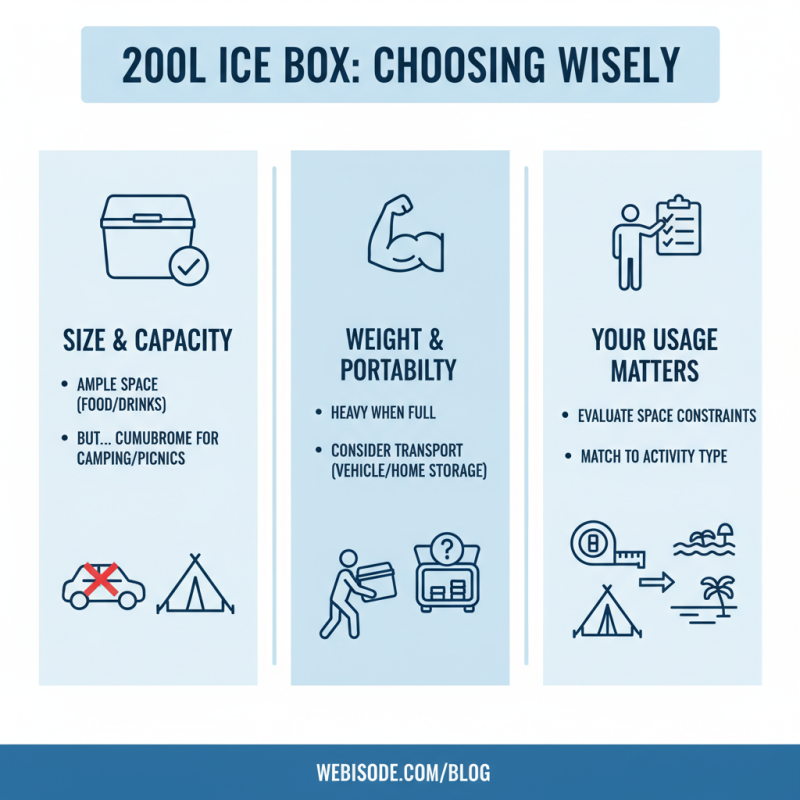
When choosing a 200L ice box, size and weight play a crucial role in your decision. A larger capacity offers ample space for food and drinks. However, consider your usage. If you are mainly using it for camping or picnics, the sheer size might make it cumbersome. Evaluate your space constraints as well, especially if you're storing it in a vehicle or at home.
Portability features significantly impact usability. Look for ice boxes with integrated handles or wheels. These can make transporting and maneuvering easier. Heavy boxes can be a hassle, especially when loaded. Remember, a well-designed ice box should balance size and weight. If it’s too heavy, it may deter you from using it frequently.
Finally, assess how often you will move your ice box. If you don't travel often, weight may be less of a concern. However, if you frequently head outdoors, opt for a lighter model. Reflect on your lifestyle. An ice box should enhance your experiences, not complicate them. A thoughtful choice now can lead to enjoyable outings.
Analyzing Price Range and Warranty Options for Value
When choosing a 200-liter ice box, understanding price ranges is essential. A basic model may cost around $100. Higher-end versions can exceed $300. Often, premium features justify the cost. Consider insulation quality and build materials. For instance, thick foam insulation enhances ice retention. Price alone does not dictate value.
Warranties play a crucial role in your selection. A typical warranty ranges from one to five years. Longer warranties indicate greater confidence in the product. Check what the warranty covers. Is it just the structure? Does it include parts? Some options offer replacements for parts that wear out quickly. This reflects the manufacturer's reliability and commitment to customer satisfaction.
Reflect on your needs. A lower-priced option might save money now but could lead to higher costs later. The more expensive models might offer durability and better ice retention. Think about your usage. Will it be for occasional outings or frequent camping trips? Analyze your priorities to find the right balance between price and warranty.