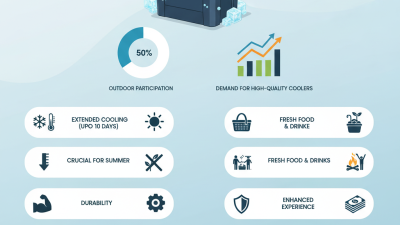
The global Cooler Box market is moving beyond basic picnic storage. Buyers now compare insulation, impact resistance, hygiene, logistics, and after-sales support. Fortune Business Insights estimates the global cooler market at about USD 5.61 billion in 2023. Its report projects continued growth through 2032, supported by outdoor recreation, food delivery, fishing, and emergency response applications. Grand View Research also identifies rising demand for portable cold-storage products, especially in North America and Asia-Pacific.
Roy Seiders, YETI co-founder and a recognized cooler industry entrepreneur, described the original design ambition as creating “a cooler that would last forever and keep ice longer.” That principle still matters. A thick-walled box, tight gasket, and reliable hinge can protect ice on a hot dock or inside a delivery van. However, longer ice retention does not automatically mean better value. Empty weight, shipping volume, repair access, and plastic quality can change the buying decision.
This guide examines China’s top 10 Cooler Box manufacturers for global buyers. It considers factory experience, product customization, material control, testing practices, export capability, and communication reliability. Certifications and published specifications are useful, but they should not replace sample inspections. No ranking is perfect. Some manufacturers show strong catalogs yet provide limited evidence of production consistency. Others may appear less polished but offer practical engineering and responsive service. Buyers should verify insulation performance, food-contact materials, load strength, packaging, and lead times before placing larger orders.
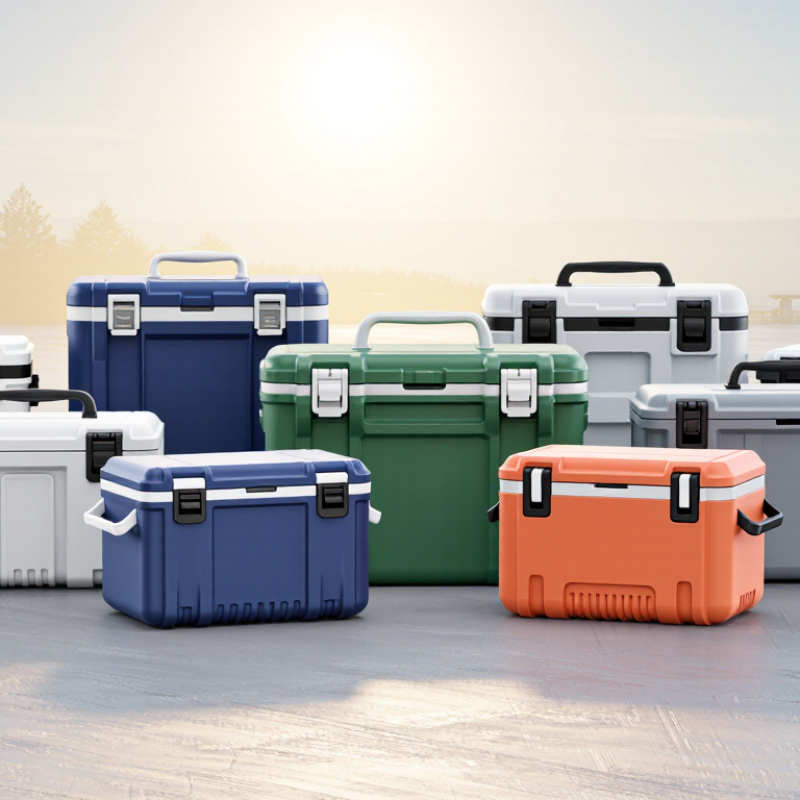
A reliable cooler box manufacturer in China should prove performance, not simply display attractive samples. Grand View Research’s 2024 analysis estimates the global coolers market at about US$1.9 billion in 2023, with continued growth expected through 2030. That demand increases supplier pressure. It also makes verification essential.
Start with measurable production controls. Ask for insulation density, wall thickness, temperature-retention results, and leak-test records. A dependable factory should identify resin grades and provide food-contact compliance documents for each material. Hinges, handles, wheels, and drain plugs need cycle testing, not only visual inspection. The ISO Survey 2023 recorded more than 1.2 million ISO 9001 certificates worldwide, but certification alone cannot prove cooler quality. Audit the actual workshop, sampling process, and corrective-action records.
Traceability matters during large orders. Each batch should connect to raw-material records, inspection results, and packing dates. Request independent testing when thermal claims affect your sales promises. Small details reveal working habits: even gasket pressure, clean mold edges, and cartons that resist damp warehouses. No factory is flawless. A supplier that admits a failed test may be safer than one promising perfection. My practical concern is often overlooked: buyers compare unit prices, then underestimate replacement claims, delayed shipments, and weak after-sales response. A reliable manufacturer gives clear tolerances, realistic lead times, and written responsibility when results fall below specification.
China’s cooler box manufacturing industry serves global buyers through flexible production, practical engineering, and export experience. Factories commonly produce insulated boxes for seafood, catering, outdoor recreation, medical transport, and retail distribution. Buyers can request different capacities, wall thicknesses, handles, hinges, drain plugs, and insulation densities. This flexibility helps importers match local climates and delivery habits. However, customization is not automatically better. A thicker wall may improve temperature retention but reduce usable space and increase freight costs. Experienced suppliers should explain this trade-off with test data, not vague claims. Product drawings, sample checks, and batch records make communication more reliable across languages and time zones.
Quality control usually covers raw material inspection, molding temperature, lid fit, odor checks, load testing, and carton protection. Responsible manufacturers can provide material specifications, inspection reports, and traceable production information when requested. Independent testing may help with large orders or regulated applications. Small details matter. A poorly aligned lid can waste cooling time during repeated opening. Buyers should also confirm packaging dimensions, pallet plans, replacement-part availability, and after-sales response before signing a contract. In my experience, factory photos alone are weak evidence. A physical sample often reveals surface marks, awkward handles, or a drain design that looks good but performs poorly.
Tips: Share the intended temperature range, loading weight, destination climate, and cleaning method. Ask for a sample under realistic use. Compare delivered cost, not only unit price. Keep written approval for every specification, because memory becomes unreliable after many revisions.
Global buyers typically select cooler box materials, insulation thickness, sealing systems, and refrigerants according to the temperature range required by the product. The benchmarks below reflect widely used cold-chain handling requirements rather than data from any individual manufacturer or brand.
Reference benchmarks: refrigerated food is commonly maintained at 0–4°C; many temperature-sensitive vaccines are stored at 2–8°C; frozen food is generally maintained at −18°C or below. Requirements may vary by product and applicable regulations.
China Top 10 Cooler Box Manufacturers for Global Buyers
Selecting a reliable cooler box manufacturer requires more than comparing prices. Experienced buyers should inspect insulation performance, material thickness, hinge strength, sealing quality, and drainage design. A practical sample test can reveal weak latches or uneven lids before mass production begins. Ask for food-contact material documents, product test reports, and factory quality-control procedures. These records support confidence, but they still require verification.
Tips: Request samples from several suppliers. Test them with ice, water, and repeated opening. Check temperature retention after 24 hours. Measure internal space, empty weight, and carton strength. Confirm whether the quoted price includes molds, packaging, testing, and shipping terms. Small omissions can create large costs later.
A dependable factory should explain its production capacity, minimum order quantity, lead time, and inspection process clearly. Review its experience with export packaging and destination-market requirements. Traceable raw materials and documented inspections improve reliability. Communication also matters. Delayed replies may signal future problems, although this is not always true. I would also request a written correction plan if a sample fails. One honest weakness is easier to manage than an impressive promise without evidence. Factory visits or independent inspections can provide stronger assurance, especially for large orders. Supplier selection should remain evidence-based, not driven by polished photographs or unusually low quotations.
China Top 10 Cooler Box Manufacturers for Global Buyers
China’s leading cooler box manufacturers compete through distinct product strengths, not identical catalogs. A practical top-ten shortlist often includes suppliers specializing in heavy-duty rotational molding, lightweight injection molding, soft-sided insulation, electric cooling, fishing storage, marine use, camping mobility, food delivery, custom OEM production, and high-volume retail supply. Grand View Research identifies outdoor recreational products as a major demand driver, while Fortune Business Insights reports steady growth in the global portable cooler market. These trends favor factories with focused engineering capabilities.
Experience matters during supplier evaluation. Check wall thickness, lid alignment, gasket compression, hinge durability, drain design, and wheel performance. A strong manufacturer should provide test records, material declarations, and clear production tolerances. Food-contact documentation is also important for commercial buyers. However, impressive samples can hide inconsistent mass production. Ask for inspection photos from different batches. No factory wins every test.
Tips: Match the supplier to the use case. Rotomolded boxes suit long trips and rough transport. Injection-molded models reduce weight and unit cost. Soft coolers improve portability. Electric units require careful checks for power compatibility and thermal performance. Request independent temperature-retention testing when possible. Reports from the International Association of Refrigerated Warehouses emphasize the importance of stable cold-chain conditions, but a cooler box is not a substitute for validated refrigerated logistics. That distinction is easy to miss.
When comparing China’s top cooler box manufacturers, global buyers should assess evidence, not polished catalogs. The global insulated coolers market is projected to grow at about 6% annually through 2030, according to Grand View Research’s market analysis. That growth attracts new suppliers, but capacity claims can be difficult to verify. Ask for evidence. Request a business license, factory address, production photos, audit records, and recent export references. Confirm whether the factory makes products directly or uses subcontractors.
Product testing needs equal attention. Check insulation performance, lid compression, hinge durability, handle load, and food-contact materials. Request test reports with laboratory names, test dates, sample numbers, and applicable standards. A certificate without traceable details proves little. The European Commission’s 2023 Safety Gate report recorded more than 3,400 product alerts, showing why documentation and traceability matter across international supply chains. Do not guess. Order samples from at least three shortlisted suppliers and test them under similar temperatures and loading conditions.
Commercial controls reduce avoidable losses. Use a written specification covering dimensions, foam density, color tolerance, packaging, inspection limits, spare parts, and delivery terms. Third-party pre-shipment inspection is useful, especially for the first order. UNCTAD reports that over 80% of world merchandise trade by volume moves by sea, so moisture-resistant cartons and container loading photos deserve attention. My practical bias is to avoid the cheapest quotation. It may reflect efficient production, or hidden compromises. Keep records. Review payment milestones, factory bank details, and any last-minute changes before releasing funds.