The Best Tips for Choosing a Cooler Box With Wheels?
Choosing the right cooler box with wheels can be challenging. With so many options on the market, it’s easy to feel overwhelmed. A cooler box with wheels is essential for various outdoor activities, such as camping, picnics, or beach outings. Having wheels makes transportation simpler, but not all models are created equal.
Consider factors like size, insulation, and material. A good cooler should keep your food and drinks cold for hours. Look for durable materials that can withstand rough handling. The size should fit your needs, holding enough items without being too bulky. Many people overlook the importance of a sturdy handle and reliable wheels, which can greatly affect usability.
While there are many quality options, some may not meet your expectations. It’s essential to read expert reviews and gather user experiences. A cooler box with wheels should serve your needs seamlessly, but finding the perfect one often requires thoughtful consideration and research. Keep an open mind, and be ready to explore various models to find the right balance between convenience and functionality.
Understanding the Different Types of Cooler Boxes with Wheels
When choosing a cooler box with wheels, understanding the types available is crucial. Cooler boxes vary widely in design and function. For instance, hard-sided coolers are known for superior insulation. They often maintain cold temperatures for 5 to 7 days. This is vital for long camping trips. On the other hand, soft-sided coolers are lightweight and portable. They are perfect for a day at the beach or a picnic. According to the Outdoor Industry Association, 65% of consumers prefer cooler boxes that offer easy transport.
Moreover, there are hybrid coolers that combine features of both types. These often include rigid frames with insulated soft shells. They provide versatility, appealing to diverse activities. A recent report from the American Camping Association revealed that nearly 40% of campers now opt for coolers with enhanced mobility features. This suggests a growing preference for ease of use and convenience.
While these insights highlight available options, potential buyers should reflect on specific needs. Durability vs. weight, insulation vs. storage capacity—these considerations can impact satisfaction. For example, a heavy cooler may be difficult to maneuver, especially for families. Additionally, some may find that price does not always correspond with quality. Research shows that 28% of cooler owners regretted their purchase due to inadequate performance. These reflections can guide consumers toward making informed choices.
The Best Tips for Choosing a Cooler Box With Wheels
| Type of Cooler Box |
Capacity (Quarts) |
Weight (lbs) |
Insulation Type |
Average Price ($) |
| Plastic Cooler |
50 |
15 |
Foam |
80 |
| Soft-Sided Cooler |
30 |
6 |
Insulated Fabric |
60 |
| Hard Cooler |
70 |
25 |
Polyurethane |
150 |
| Wheeled Cooler |
40 |
12 |
Vacuum Insulation |
90 |
| Electric Cooler |
45 |
20 |
Electric Cooling |
120 |
Key Features to Look for When Selecting a Cooler Box
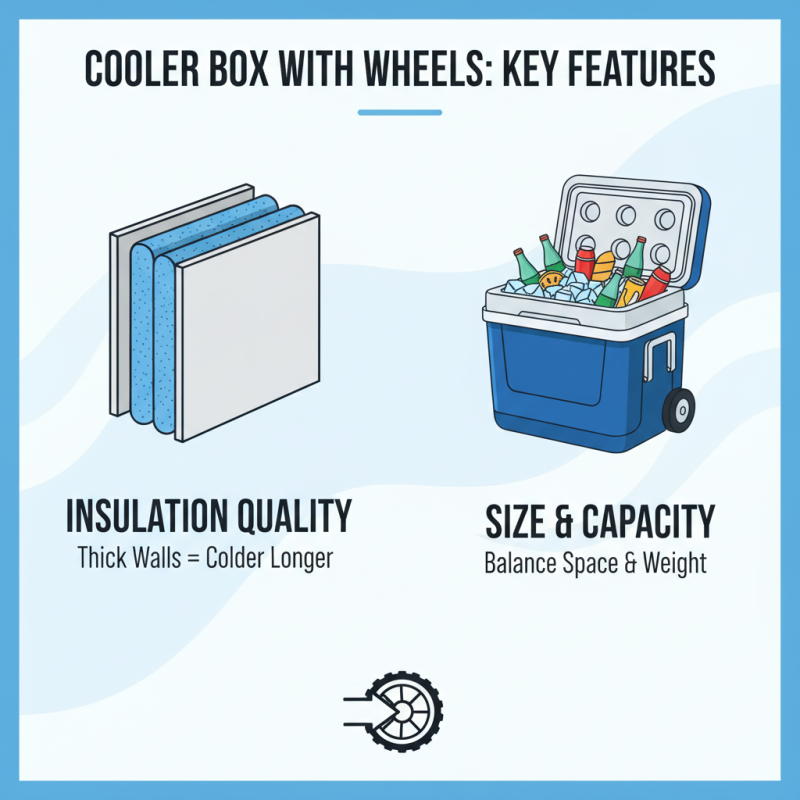
When selecting a cooler box with wheels, several key features can make a difference. Look for insulation quality. Thick walls often mean better temperature retention. This is crucial for keeping food and drinks cold during long trips. Also, consider the size and capacity. A larger cooler can hold more, but it may be heavier. Balance is essential between space and weight.
Wheels are another major feature. Check for sturdy, durable wheels that can handle rough terrain. If they are weak, your cooler will be hard to move. Different wheel designs can also matter. Some coolers have larger wheels that roll better over sand or gravel. Stability is key too. A cooler that tips easily can spill its contents.
Finally, pay attention to added conveniences. Features like cup holders, bottle openers, and ergonomic handles can enhance your experience. Thoughtful design makes a cooler more user-friendly. Reflect on your needs. Do you prioritize portability or storage capacity? Each trip may require different features. Choose wisely to ensure your investment is worth it.
Factors Influencing the Size and Capacity of Cooler Boxes
When choosing a cooler box with wheels, several factors influence its size and capacity. Understanding these factors is crucial for making an informed decision. The purpose of the cooler dictates much of its size. For camping trips, a larger box is ideal. However, for short picnics, a compact model may suffice.
Consider the number of people you typically serve. A small group can manage with a 30-quart cooler. Larger gatherings may require at least a 50-quart option. There’s often a trade-off between capacity and portability. A huge cooler may hold more, but it can be challenging to transport.
Tips for choosing the right size include checking dimensions to ensure it fits your vehicle. Look for features like sturdy wheels and a comfortable handle for easy maneuvering. Pay attention to weight; lighter models are preferable for outdoor activities. It’s wise to consider how much food and drink you’ll carry. A miscalculation can lead to disappointment on your trip. Reflect on your specific needs to avoid unnecessary purchases.
The Best Tips for Choosing a Cooler Box With Wheels
When selecting a cooler box with wheels, it's important to consider the size and capacity that best suits your needs. The following chart illustrates common sizes and their corresponding capacities, helping you make an informed decision.
Evaluating Insulation Materials for Optimal Temperature Retention
When selecting a cooler box, insulation materials play a crucial role. Different materials offer varying levels of temperature retention. Some common insulation types include foam, polyethylene, and rubber. Foam is lightweight, yet it can lose insulating properties over time. Polyethylene is durable but can be less effective at extreme temperatures. It’s vital to weigh the pros and cons of each.
Consider the thickness of insulation as well. Thicker walls generally provide better insulation. However, a bulkier cooler might be harder to transport. Balancing weight and insulation effectiveness is essential. Reflect on how often you will need optimal temperature retention. For short trips, lighter materials may suffice, while long camping weekends demand superior insulation.
Additionally, air gaps in insulation can lead to temperature fluctuations. Check for solid construction without voids. Always examine reviews for real-life performance insights. Gathering opinions from various users can provide a clearer picture. They often highlight personal experiences that can aid in your decision. Reflect on what matters most for your needs.
Budget Considerations and Cost-Effectiveness in Cooler Box Selection
When selecting a cooler box with wheels, cost-effectiveness is essential. It’s crucial to balance your budget with the cooler’s functionality and durability. Look for options that offer good insulation but do not compromise on quality. Typically, cheaper models might lack in performance or longevity. Investing a bit more upfront can save money in the long run.
To make a wise choice, consider these tips. First, evaluate the size you need. Smaller units may be cheaper but might not meet your storage needs. Assess the materials; sturdy construction often means better durability. Check for user reviews to gauge real-world performance.
Be mindful of extra features. Some coolers provide additional elements like cup holders or storage compartments. While they may increase the price, they can enhance user experience. Ultimately, weigh the pros and cons of features against their costs. It's a balancing act that can lead to a cooler that fits both your needs and your budget effectively.