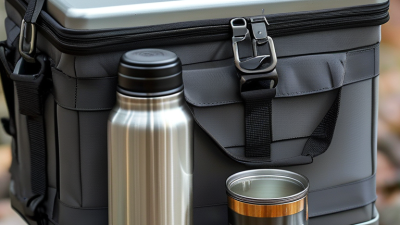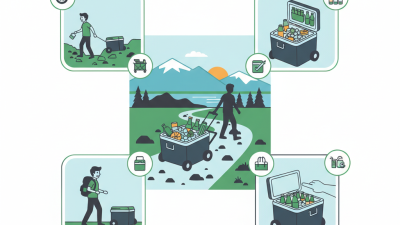
Choosing the right Cooler Box 2l requires more than comparing colors, prices, or impressive product photographs. Global buyers must examine insulation performance, internal capacity, food-contact materials, leak resistance, portability, and supplier consistency. A compact box may hold lunch, medicine, or several beverage cans, yet its usable space can shrink after adding ice packs. Small detail. Big consequence.
Recent reports from Grand View Research and Fortune Business Insights identify portability, outdoor recreation, and improved thermal insulation as important drivers in the global cooler market. However, these broad market reports rarely explain the practical limits of a 2-liter format. That gap matters. Buyers should request test conditions, temperature-retention data, carton dimensions, and sample photographs before approving large orders. Marketing language alone is not evidence.
Food-safety specialist Ben Chapman of North Carolina State University summarizes the central issue: “A cooler is not a refrigerator.” His warning reminds buyers to evaluate temperature control, not merely insulation thickness. The U.S. Food and Drug Administration recommends keeping perishable foods at 40°F (4°C) or below, while the USDA advises using sufficient ice and limiting exposure time. These guidelines should shape product specifications and user instructions.
A reliable Cooler Box 2l should feel practical in the hand, close securely, and survive repeated opening. It should also fit the buyer’s distribution model, climate, and customer habits. Some conclusions remain imperfect because laboratory performance differs from a hot delivery van or a crowded beach bag. That is exactly why careful sampling, independent verification, and honest product claims remain essential for global purchasing decisions.
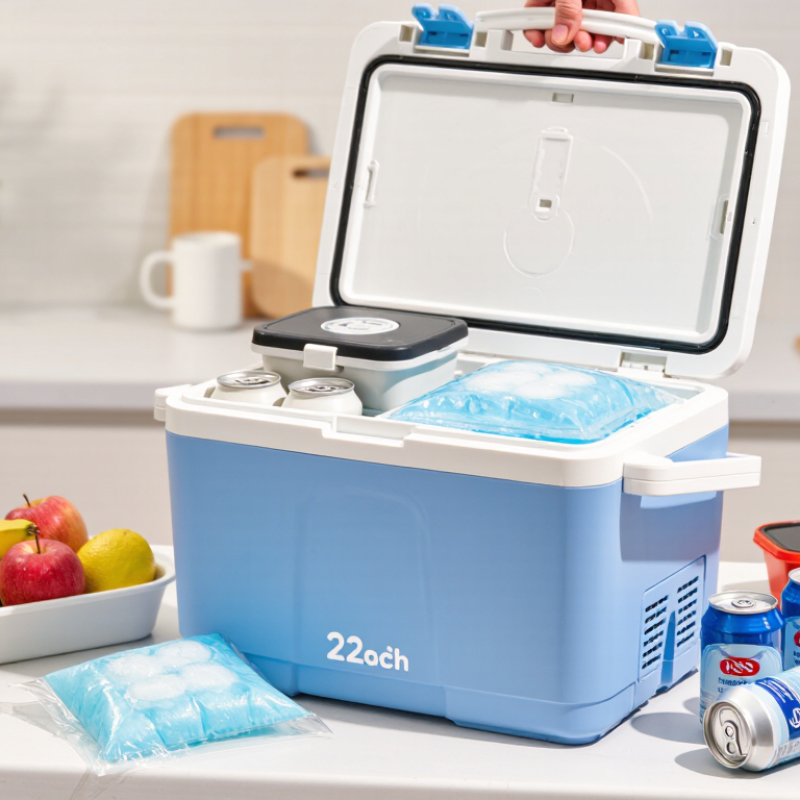
A 2L cooler box is compact, but its design strongly affects daily performance. Hard-shell models protect sandwiches, fruit, and small bottles from crushing. They usually clean easily and resist rough handling during commuting or short outdoor trips. Soft cooler bags weigh less and often fold flat after use. However, their insulation can compress around the contents, reducing useful space.
Insulation type matters in different climates. Closed-cell foam offers dependable thermal resistance and does not absorb water easily. Reflective lining can reduce radiant heat, but it cannot replace thick insulation. A tight zipper or gasket helps limit warm air entering the box. Small capacity matters. A 2L label may describe external volume, not usable internal space. Measure twice. A 500 ml bottle can consume more room than expected.
I have found that the best choice depends on the journey, not just the temperature claim. For an office lunch, a lightweight soft box may be enough. For a hot-market delivery or a long train ride, a rigid body and stronger insulation provide better protection. Add frozen packs only when they fit without crushing food. Keep the box shaded and open it briefly. One imperfect detail deserves attention: cooling time varies with starting temperature, pack size, and opening frequency. Buyers should request test conditions, material details, cleaning instructions, and internal measurements before ordering internationally. If the contents require a controlled medical temperature, use validated equipment instead of relying on a general cooler box.
A 2L cooler box should be judged by temperature retention, not appearance. The FDA Food Code 2022 recommends holding temperature-controlled food at 5°C or below. USDA guidance uses 4°C as the safer household benchmark. These figures matter during commuting, outdoor work, and short deliveries.
Ask for test conditions, including starting temperature, ambient temperature, ice-pack weight, and test duration. Without them, cooling claims remain difficult to compare.
Insulation thickness directly affects heat transfer. Closed-cell foam usually performs better than thin, loosely packed insulation. The lid seal also matters. A small gap can admit warm air every time the box moves.
ASTM F2095 provides a recognized method for evaluating ice-chest performance, including ice retention under controlled conditions. Buyers should request results from comparable tests.
A 2L box may lose useful space after adding two large cold packs. Measure the internal cavity, not only the advertised capacity. Pre-chilling the box and contents can improve early temperature stability. Keep it shaded, and limit opening time. Simple details matter.
In practical testing, place a calibrated thermometer beside the contents. Record readings hourly for eight hours. A box that starts at 2°C but rises above 5°C quickly may be less useful than expected.
The test may still be imperfect. Real travel includes sunlight, movement, and repeated opening. Insulation performance can also change after compression or aging.
Global buyers should examine material specifications, seal quality, cleaning access, and regional safety documentation before purchasing.
For global buyers, a 2L cooler box must balance capacity, weight, materials, and portability. Measured capacity is not usable capacity. Thick insulation, hinges, and a gasket reduce space for food. USDA FSIS guidance recommends keeping chilled food at 40°F (4°C) or below with insulated containers and cold sources. Therefore, internal shape matters more than exterior dimensions. A narrow box may fit bottles poorly, while a square cavity uses space better.
Weight becomes noticeable during walking, cycling, or airport transfers. Two liters of water already weighs about 2 kilograms. An empty 600-gram box can quickly become a heavy hand load. Foamed plastic insulation offers low weight and strong thermal resistance, but shell durability varies. UNEP’s Global Plastics Outlook reports that only about 9% of plastic waste was recycled globally in 2019. This does not define cooler performance, yet it supports checking recycled content, repairability, and disposal guidance. I still sometimes overvalue toughness and forget the carrying distance.
Portability is more than a handle. A broad shoulder strap spreads pressure across the body. Rounded corners reduce contact with luggage and car interiors. Compare loaded weight, strap stitching, latch strength, and liner cleaning. The lid should open with one hand, but not loosen during movement. Small details matter. A cooler that looks efficient online may feel awkward after thirty minutes. My own mistake was choosing a rigid model with excellent insulation but poor grip comfort. For international purchasing, request verified capacity, material descriptions, empty weight, and test conditions before comparing prices.
How to Choose the Best Cooler Box 2L for Global Buyers?
Safety begins with temperature control, not appearance. The FDA Food Code 2022 recommends holding cold food at 5°C or below. For global buyers, a 2L cooler should show insulation performance under stated test conditions. Ask for test duration, starting temperature, and ambient temperature. Without those details, “keeps cool” means little. I would not trust a large temperature claim without supporting records.
Material safety also needs evidence. Food-contact surfaces should comply with the destination market’s requirements, such as applicable EU food-contact rules or FDA regulations. ISO 22000:2018 can support a supplier’s food-safety management process, but it does not automatically certify the cooler itself. Check the liner, sealant, handle, and ice-pack compartment separately. Small parts matter.
Durability is often tested poorly. ASTM D4169-22 provides distribution testing methods for vibration, impact, and compression. Buyers should request relevant test results, especially for international shipping. Inspect hinge movement, seam strength, and lid alignment by hand. A weak seal wastes cooling capacity. Cleaning requirements deserve equal attention. The FDA Food Code 2022 requires food-contact surfaces to be cleaned at suitable intervals, commonly no longer than four hours during use. Choose smooth, non-porous interiors with rounded corners and removable seals. Avoid hidden channels. They collect residue. Realistically, users may skip cleaning after one trip, so easy access matters more than attractive texture.
| Cooler Box Type | Typical Construction | Insulation Performance | Food-Contact Safety Checks | Durability Factors | Cleaning Requirements | Best Use Case | Buyer Assessment |
|---|---|---|---|---|---|---|---|
| Rigid EPP Cooler Box | Expanded polypropylene body with a fitted lid; commonly molded as a lightweight one-piece container. | Good thermal resistance for short-term transport. Performance depends on wall thickness, lid fit, contents, and ambient temperature. | Ask for a food-contact declaration and migration-test documentation for the liner or complete product. For EU sales, check suitability under Regulation (EC) No. 1935/2004 and applicable plastics rules where relevant. | Resists impact, moisture, and repeated handling. Hinges, handles, and lid alignment should be checked through repeated-use testing. | Non-absorbent surfaces are generally easy to wipe. Use mild detergent and warm water; dry fully before storage. Avoid harsh solvents and abrasive tools. | Meal delivery, medical sample transport, picnics, and short-distance chilled delivery. | Strong all-round option |
| Rigid EPS Cooler Box | Expanded polystyrene foam body, often supplied with a separate lid and an outer carton or protective sleeve. | Good insulation-to-weight ratio, but the foam is more vulnerable to crushing and edge damage than molded EPP. | Confirm that any food-contact liner, bag, or inner film is documented for the destination market. Foam packaging should not be assumed to be food-contact compliant without supplier evidence. | Lightweight but relatively brittle. Drop, compression, lid-fit, and corner-damage checks are important for international shipping. | Foam may retain dirt in damaged areas and is difficult to sanitize if cracked. Use a removable, washable liner for reusable applications. | Single-trip or limited-use shipping of chilled products and temperature-sensitive goods. | Best for controlled, limited use |
| Insulated Soft Cooler | Textile outer layer, foam insulation, and a waterproof lining; usually fitted with a zipper, carry handle, or shoulder strap. | Moderate insulation performance. Zipper openings, seams, and flexible walls can increase heat transfer compared with a well-sealed rigid box. | Verify the safety of the inner liner and any coatings that may contact food. Request testing for the target market rather than relying only on the outer fabric specification. | Flexible and convenient, but seams, zippers, straps, and liner welds require inspection. Abrasion resistance is important for frequent travel. | Wipe spills promptly. The liner should be smooth, leak-resistant, and fully openable for drying. Do not store while damp, as odor and microbial growth may develop. | Personal lunches, short outdoor trips, office use, and lightweight travel. | Best for portability |
| Rigid Plastic Cooler with Foam Core | Durable plastic outer shell, polymer foam insulation, and a separate lid or gasketed closure. | Good and consistent insulation when the lid seals correctly. Actual cooling time varies with ice or cold-pack quantity and loading pattern. | For food-contact use, request declarations and test reports covering the inner surface, gasket, colorants, and coatings. EU and United States requirements differ, so market-specific evidence is needed. | Good resistance to impact, moisture, and repeated transport. Check UV exposure, handle strength, hinge cycles, and gasket compression. | Smooth interiors are easy to wash with mild detergent. Drain plugs, seams, and gasket channels should be accessible for rinsing and drying. | Repeated commercial use, outdoor events, retail delivery, and vehicle transport. | Best for repeated handling |
| Vacuum-Insulated Stainless-Steel Container | Double-wall stainless-steel construction with a vacuum gap and screw or press-fit lid. | Very good temperature retention for its size when the lid is properly sealed; the narrow opening can limit loading and cleaning access. | Check the stainless-steel grade, weld quality, lid polymer, gasket material, and food-contact documentation. A food-safe claim should be supported by destination-market records. | Strong against dents and repeated use, although exterior dents may affect appearance and lid or gasket damage can reduce sealing performance. | Wash after every use. A wide-mouth design is easier to inspect and clean; remove the gasket where possible and dry all components separately. | Individual beverages, snacks, and premium reusable personal cooling. | Best for long-term personal reuse |
| Reusable Gel-Pack-Compatible Cooler | Small insulated container designed to hold reusable cold packs without direct food contact. | Cooling duration depends mainly on pack mass, pack temperature, insulation thickness, ambient conditions, and how often the lid is opened. | Cold packs must be leak-resistant and clearly labeled. Check the pack material, closure, filling, and safety instructions separately from the cooler box. | Inspect pack compartments, seams, closures, and internal dividers for tearing or deformation after repeated loading. | Keep cold packs separate from unwrapped food unless the pack is specifically designed and documented for that contact. Clean and dry the cooler after each spill. | Lunch transport, sample shipping, cosmetics, and short-duration chilled delivery. | Practical with replaceable cooling media |
How to Choose the Best Cooler Box 2L for Global Buyers?
Selecting Suppliers, Certifications, Pricing, and Shipping Options
A reliable supplier should provide clear factory details, product drawings, and recent inspection records. Ask for a 2L sample before discussing large quantities. Check the lid seal, hinge strength, inner coating, and handle comfort by hand. Small defects often appear during repeated opening. The cheapest sample is not always the safest choice.
Request food-contact material declarations and test reports for the liner, seal, and insulation. Certification needs vary by destination, so confirm requirements with an experienced customs broker. A supplier with a documented quality system can reduce production surprises. Still, paperwork alone is not proof of consistent quality. I would request photos from several production batches and compare their colors, dimensions, and surface finish.
Pricing should include tooling, packaging, inspection, and replacement allowances. Ask whether the quote uses EXW, FOB, or delivered terms. A low unit price can become expensive after freight, port fees, and customs charges. Shipping options depend on carton size, gross weight, order quantity, and delivery urgency. Air freight suits samples, but sea freight usually fits larger orders. Protect each box with inner padding; crushed corners create avoidable claims. I would also confirm carton markings and pallet requirements before payment. Mistakes still happen, especially when suppliers interpret “standard packaging” differently.