
7 Ice Box Freezer Buying Tips for Global Buyers?
Buying an Ice Box Freezer for international use requires more than comparing capacity and purchase price. Climate, voltage, shipping distance, service access, and food-safety expectations can change the real cost. A freezer that performs well in a cool warehouse may struggle in a humid tropical kitchen.
The International Energy Agency’s The Future of Cooling report warns that cooling demand could more than triple worldwide by 2050 without stronger efficiency measures. The United Nations Environment Programme and FAO also connect reliable cold chains with reduced food loss and improved resource efficiency. These findings make insulation, compressor performance, energy consumption, and temperature stability important buying criteria, not optional details.
Professor Toby Peters, a recognized sustainable-cooling expert at the University of Birmingham, has described the cold chain as “one of the most important infrastructures in the world.” His point matters to global buyers. A freezer is not an isolated appliance. It operates inside a wider system involving transport, electricity, ventilation, loading habits, and maintenance.
This guide presents seven practical buying tips for an Ice Box Freezer. It examines usable capacity, energy labels, climate-class ratings, refrigerants, plug compatibility, warranty support, and delivery risks. Small details matter. A poorly sealed lid can waste energy every day. A missing service partner can create longer losses during a breakdown.
No checklist is perfect. Product data can be incomplete, and laboratory ratings may not reflect crowded, frequently opened conditions. Buyers should verify technical documents, test reports, and local support before ordering. The cheapest model may become the most expensive choice. Think beyond the box.
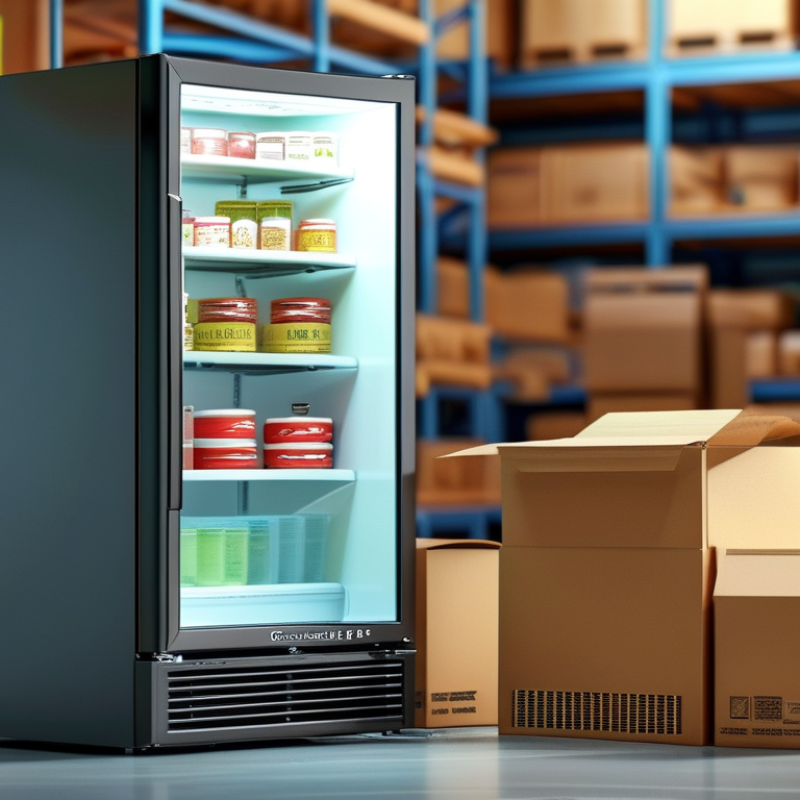
Define Freezer Capacity, Temperature, and the −18°C Storage Standard
7 Ice Box Freezer Buying Tips for Global Buyers
Define Freezer Capacity, Temperature, and the −18°C Storage Standard
Global buyers should define freezer performance before comparing prices. Capacity is more than a large number on a product sheet. Check gross capacity and usable capacity separately. Shelves, baskets, evaporator space, and thick insulation reduce actual loading room. Leave gaps around packages. Overfilling blocks cold air and slows freezing. A practical test uses the buyer’s largest container. Measure whether it fits without forcing the lid.
Temperature deserves equal attention. For frozen food storage, −18°C is a widely accepted international benchmark. It helps preserve quality during extended storage, but it does not instantly freeze warm products. Ask whether the stated temperature is a setpoint, average, or lowest reading. These are not the same. Use an independent thermometer near the cabinet’s center. Record readings after loading, door opening, and power recovery. A display can look reassuring while food remains too warm.
Consider ambient climate, voltage stability, door frequency, and service access. A freezer tested in a cool showroom may struggle in a hot storeroom. Choose enough capacity for real inventory, not an idealized spreadsheet. One assumption deserves challenge: −18°C everywhere does not mean identical performance. Temperature swings, poor seals, and uneven airflow still matter. Review the manual, test sample units, and question unclear specifications.
| No. | Buying Tip | Key Data Dimension | Reliable Reference or Benchmark | What Global Buyers Should Check |
|---|---|---|---|---|
| 1 | Define usable freezer capacity | Net capacity in litres (L), not only gross capacity | A practical planning range is approximately 30–60 L per person, depending on shopping frequency, food type, and household habits. | Compare the manufacturer’s stated net volume. Allow space for air circulation and avoid filling the cabinet so tightly that frozen air cannot move between packages. |
| 2 | Confirm the −18°C storage standard | Stable internal temperature in °C | −18°C or colder is the widely used reference for long-term storage of commercially frozen food. | Check whether −18°C is the normal operating temperature or only the lowest temperature reached during a short-term fast-freeze mode. |
| 3 | Evaluate temperature control and recovery | Set-point range, temperature uniformity, and recovery after door opening | Many freezers operate around −18°C to −24°C; actual performance varies with ambient temperature, loading, and door-opening frequency. | Prefer an adjustable thermostat, a visible temperature display or alarm, and documented test conditions. A thermometer should be used to verify actual cabinet temperature. |
| 4 | Match the freezer to the climate | Climate class and permitted ambient temperature | Common climate classes include SN: 10–32°C, N: 16–32°C, ST: 16–38°C, and T: 16–43°C. | For hot warehouses, kitchens, or tropical regions, select equipment rated for the expected ambient temperature. Performance outside the stated range may be unreliable. |
| 5 | Compare energy use fairly | Annual electricity consumption in kWh/year | Energy consumption depends on capacity, insulation, compressor design, ambient temperature, and test method; there is no single universal kWh figure. | Compare units of similar net capacity using the same regional test standard. Estimate operating cost as annual kWh × local electricity price. |
| 6 | Check electrical compatibility | Rated voltage, frequency, plug type, and rated current | Household power systems commonly use approximately 100–127 V or 220–240 V and 50 or 60 Hz, depending on the market. | Verify the rating plate before shipment. A plug adapter does not convert voltage or frequency, and an unsuitable power supply can damage the compressor. |
| 7 | Plan installation, transport, and backup | External dimensions, ventilation clearance, door or lid access, and temperature-rise time | Freezers require unobstructed heat dissipation and should be installed according to the clearance requirements in the technical manual. | Measure doorways and final placement space, confirm drainage and leveling needs, and ask for the rated storage time during a power interruption. Keep the unit closed during an outage to retain cold air. |
Related Posts
-
Top Catering Cooler Box Options for 2026 Buyers?
-
Top Tips for Choosing the Right Cooler Box for Your Needs?
-
How to Choose the Best Roto Molded Cooler Box for Your Needs?
-
How to Choose the Best Catering Cooler Box for Your Events?
-
How to Choose the Best Fishing Boat Ice Box for Your Needs?
-
Top Portable Ice Box Reviews for Your Outdoor Adventure Needs?